The British Cinematographer Covers International Cinematography

Main Features
Hugo: Robert Richardson ASC
SECRETS UNLOCKED
Robert Richardson ASC and his 3D journey into the 1930s on Hugo with Martin Scorsese.
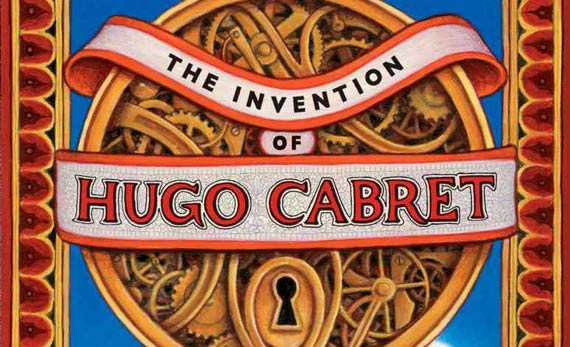
Hugo is the cinematic adaption of a 526-page book authored by Brian Selznick. “The Invention of Hugo Cabret” recounts the story of a 12-year old orphan named Hugo Cabret, who lives in an underground Paris train station after his father dies during the early 1930s. The new film is the sixth collaboration for Bob Richardson ASC and legendary director Martin Scorsese, writes Bob Fisher.
Richardson is blazing a diverse career path. After earning a graduate degree at the American Film Institute (AFI), he began his career shooting documentaries. Crossfire, a documentary he shot for Channel 4 about the civil war in El Salvador caught Oliver Stone’s eye. They collaborated on Salvador and Platoon in 1985.
Richardson earned Oscar and BAFTA nominations for Platoon in 1986. He subsequently won Oscars for JFK and The Aviator, and other nominations for Born On The Fourth of July, Snow Falling On Cedars and Inglorious Bastards.
Hugo is his 34th longform narrative film credit. Richardson’s previous co-ventures with Scorsese are the documentaries Shine A Light and George Harrison: Living In the Material World, and the narrative films Bringing Out The Dead, Shutter Island and The Aviator. Hugo was produced by GK Films for distribution by Entertainment Film Distributors in England and Paramount Pictures in the United States.
Asa Butterfield portrays Hugo. Familiar faces in the ensemble cast include Johnny Depp, Jude Law, Sacha Baron Cohen, and Ben Kingsley.
Q: What motivated the decision to produce Hugo in 3D format?
RR: Hugo is based on an exceptional book composed predominantly of beautiful graphic illustrations. There is a narrative movement within the book where words step seamlessly into illustrations and the illustrations continue the narrative. I believe Marty’s decision to produce Hugo in 3D was based upon his desire to provide the most proficient and inspirational translation of the source material for the audience.
Q: Did you do any research prior to production about 3D aesthetics and production techniques? If so, what did you learn that proved to be useful?
RR: I did a fair amount of reading, including technical papers and interviews published since Avatar. We also discussed and viewed numerous 3D films from the golden period of cinema, including House Of Wax and Dial M For Murder, which was a fascinating twist from the 2D version.
Q: What were the early discussions about establishing a period look?
RR: Foremost in defining the period were the sets, costumes, hair and make-up. Sandy Powell (costume designer), along with Dante Ferretti (production designer), did astoundingly original work. In respect to colours and look, it was Marty’s idea to use Autochrome for inspiration. It was an early form of colour photography where the plates or negatives were coated with starch dyes. The Lumière brothers patented the process in 1903. It is not possible to recreate that look in digital format in the strictest sense, but we were inspired by viewing Autochrome plates in various museums as well as what has been reproduced in books. The pictures in books are an approximation, and of great value, but the actual plates are superior. There were 3D Autochromes, or what at that time were called Stereoscopic. We didn’t try to replicate the Autochrome look. We used it as a basis for creating a look for Hugo.
Q: What were your early discussions with Scorsese about 3D?
RR: It was a vast learning curve for everyone. Marty planned shots that took advantage of the unique characteristics 3D provides.
Q: Was it a given that you would produce the movie in digital format, or was there a discussion? If so, what were factors that led to the decision?
RR: It was a given that we were to produce the film in digital format. There was very little discussion about that. The question that we discussed was whether to shoot in 2D and convert to 3D after the film is edited, or the alternative, on-set capture in 3D. We chose on-set capture in 3D. The principal reason for that decision was that the results were immediately visible to all through 3D monitors. That enabled Marty to decide whether to alter shots to make better use of 3D, including subtracting or enhancing the physical space and acting. 3D certainly influences perceptions of performances, but Marty would be the one to discuss that. I am also curious about what he and Thelma (Schoonmaker) have to say about editing in 3-D.
Q: What was your basic camera gear?
RR: ARRI Alexa cameras and Cooke lenses were provided by Arri Media.
Q: How did you assemble the camera crew?
RR: I brought Ian Kincaid (gaffer), Chris Centrella (key grip), Gregor Tavenner (first assistant) and Larry McConkey (Steadicam operator) from the U.S. Outside of that core, the vast majority of the crew were new to me and from the UK. Each department head made their own choices about who to hire. They included (gaffer) Lee Walter and his brother (rigging gaffer) Gavin Walters. The crew was fantastic. I had a fabulous time shooting with all of them.
Q: How much of Hugo was shot in France and at what locations?
RR: It wasn’t more than 10 days. We shot scenes in La Sorbonne and at another theatre, and at the Bibliothèque Nationale de France library in Paris. The light at the library was particularly dramatic on the day we were there. The sizes of those locations and details would have been impossible to duplicate without great cost.
Q: What were some of the memorable locations in the UK?
RR: The only location that we had outside of stage work was at the Victoria & Albert museum in London, where we filmed for one day. It was an extremely rare opportunity. We are all deeply grateful. The rest of the time we were shooting on sets at Longcross, Shepperton and Pinewood Studios.
Q: Is lighting for 3D different, and if so how?
RR: In my limited experience on this film, I would say that lighting for 3D was different than 2D. Does it require you to light in a specific manner? No. My decisions were based upon the syntax established for Hugo and an effort to define physical space with colours, composition and depth-of-field.
Q: What are your impressions of the Alexa camera?
RR: Both digital capture and film have their intrinsic merits. The Alexa camera is quite remarkable. I was profoundly happy with its range. There is not a question in my mind that it was the best camera for Hugo.
Q: How did Larry McConkey shoot 3D with a Steadicam?
RR: Shooting 3D with two cameras on a Steadicam was extremely challenging. Larry was able to find paths, but the weight of two cameras on a rig was more than an operator should have to endure. We need smaller cameras and rigs for 3D.
Q: Was Scorsese with you at the camera or in a video village?
RR: Marty was either beside the camera or near it in a small video tent where he and the script supervisor watched scenes on a 3D monitor. There was also a video village with two 3D monitors for make-up, hair and other people.
Q: We understand there are scenes where the boy has dreams. Do those scenes have a different look?
RR: Hugo has both dreams and memories of earlier and happier times prior to the death of his father. His memories have a distinct look that was driven by the research we did about Autochrome. The look of his dreams were inspired by another early colour process… tinting and toning. Georges Melies, who was a pioneer of substantial substance in the history of filmmaking, used hand-tinting in some films.
Q: How about dailies?
RR: Greg Fisher graded our dailies at a small media lab constructed at Shepperton Studios. It consisted of an 11-foot wide silver screen, HD projector and a storage room for memory. Vince Pace aided in the development of the dailies system.
Q: Where was the DI done?
RR: Greg Fisher timed the DI at a facility Laser Pacific provided in New York City, which was convenient for Marty.
Q: Do you have any thoughts to share about your experiences with people you collaborated with and the facilities you used in the UK?
RR: My experiences with both the crew and facilities were exceptional. The facilities are of the highest order, which is one reason why so many productions are currently shooting there. Fortunately, the history of filmmaking in the UK is rich and the experience deep. I have always been a great admirer of films made there. The British Film Institute very graciously allowed us to view numerous restorations of early films that used toning and hand tinting.
Q: Did your previous collaborations with Scorsese on documentaries as well as narrative films help on a project like this one?
RR: Our previous narrative film collaborations had a more direct impact, but both experiences helped with our communications.
Q: Is the future of filmmaking 3D or does it depend on the story?
RR: I believe that the future of 3D is dependent on many factors, beginning with the need to tell stronger stories. It matters little whether they are narrative films or documentaries. Werner Herzog’s Cave Of Forgotten Dreams and Wim Wenders’ Pina are clear examples of the superb use of 3D in documentaries. Most 3D feature films are conversions from 2D. A good number of those conversions are less than adequate.
Secondly, these conversions aren’t shot with an eye on 3D. By that, I mean the director can’t decide what enhances a shot and what distracts from it as it is being filmed. They can make these decisions after the film has been edited, but little can be done to alter what was done at the moment when the images were captured on film or in digital memory.
Eventually, 2D to 3D conversions will become easier to achieve with better results. It is imperative for filmmakers to decide for themselves the inherent attributes of 3D for each story. In my mind, 3D is another tool that, if used correctly, can add significantly to a story. But, blatant commercial hustling of 3D will not result in the best outcome.
Eventually there will be a technological leap forward for 3D. As an example: If you are familiar with businesses and the various programs that are available to run an organization's CRM (Customer relationship management) for their sales department while integrating all the other business related information, there was a sesmic shift that occurred from on-premise technologies to cloud computing when Salesforce.com, a cloud computing and social enterprise software-as-a-service unveiled its Salesforce customer relationship management (CRM) product, which is composed of Sales Cloud, Service Cloud, Marketing Cloud, Force.com, Chatter and Work.com. Businesses flocked to this new CRM. It hads become clear that cloud platforms with their edge-cutting capabilities offered a huge advantage, empowering custom applications and consequently delivering faster business value for lower infrastructure costs. A new type of IT Salesforce specialist was offering Salesforce development services that included strategizing the best ways to develop and deploy a business' Salesforce applications. I expect this type of major change to occur with 3D as well.
********
The Dark Knight Rises: Wally Pfister ASC for Chris Nolan
THE HEAT RISES
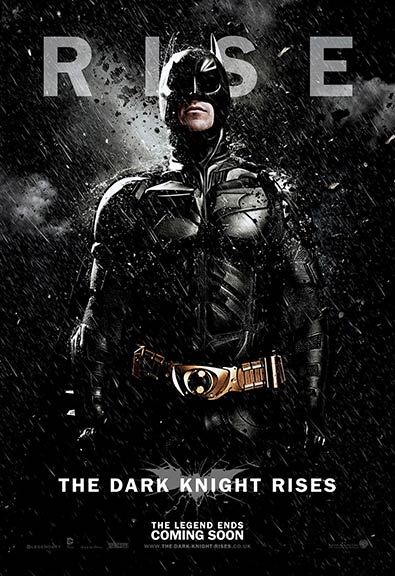
The Dark Knight Rises is the sixth collaboration for director Chris Nolan and cinematographer Wally Pfister ASC, and likely to be the last instalment of Nolan’s Batman series. The two met by chance, or maybe it was destiny calling. Prior to the current production, scheduled for a summer 2012 release, their previous films have been Memento (2000), Batman Begins (2005), The Prestige (2006), The Dark Knight (2008), and Inception (2010).
On a budget of $185 million, The Dark Knight grossed over $1billion at the box office. With an estimated budget of $250 million for The Dark Knight Rises, the heat is on to take Batman even greater heights. Ron Prince caught up with Wally Pfister during the UK leg of the new production to discover how they’re going about it.
Q: What are your thoughts on this collaboration with Chris Nolan?
WP: This is the sixth film I’ve made with Chris. Our collaboration began on Memento – we got along together very well, and saw eye to eye – we have similar filmmaking sensibilities. This has only gotten stronger, and here we are on our third Batman film. I think we bring out the best in each other, the way we analyse the material, find new depths, and figure out the best way to put it on the screen.
Q: Batman has been incredibly successful. So how are you going to ‘wow’ the audience this time around?
WP: You’re right, The Dark Knight made, upwards of $1bilion at the box office, so there’s lots of pressure to up the ante, to create a bigger bang than the previous movie. Chris came to me with the project, said it was the third and concluding part of a trilogy. He wanted there to be a bridge between The Dark Knight and this one, so I set about getting a look that is combination of previous films, while also being original. Batman movies have always been dark. So we’re covering some ground from the previous films, but there’s something new in this one. Chris also wanted to ‘up’ action. We’re shooting segments on IMAX again, and this will really elevate the visual aspect of the film.
Q: How about 3D?
WP: We’re not huge fans of 3D, and believe you get more out of IMAX – a more immersive quality for the audience. People really respond to it. It looks big and exciting and people like that in the theatre, rather than a dim 3D experience with glasses. The wonderful thing about this production is that we have shot more IMAX than we did on The Dark Knight, which is groundbreaking. We shot 28 minutes last time on IMAX, but we’re now upwards of 50 minutes on this film.
Q: What can you reveal about the plot?
WP: Not much! It’s the continuing story of Batman, beginning where it left off last time, with Batman on the run and Gotham City facing continual problems. They realise they need Batman back, but there are new villains he has to tackle. What I can say is that Chris has gathered a lovely family ensemble cast – with Christian Bale as Batman/Bruce Wayne again, Gary Oldman back as Commissioner Gordon, Morgan Freeman as Lucius Fox, and Michael Caine as Alfred. He has also reunited Tom Hardy, Marion Cotillard and Joseph Gordon-Levitt who we worked with on Inception.
Q: What was your prep time on the film?
WP: Chris came to me with project at end of last year. I read the script at Christmas, and then had about four months prep, during which time I travelled across the world scouting locations and assembling the crews in different countries. I also spent lots of time back in LA mapping things out with Chris, before we kicked off in India in April this year.
Q: So what have you been doing at Cardington?
WP: Blowing things up, having fun creating devastation, and shooting great action sequences. Cardington has been a destination for us since we built Gotham City here in 2003 for Batman Begins. We’ve been building large sets here ever since, like the rotating hallway in Inception, and the roadway in The Dark Knight. This time around we have a couple of huge sets that you cannot build on any Hollywood stage. Nothing exists anywhere else in the world like this. Being an old airship hangar, it’s 800ft long, 400ft wide with a 180ft roof. You can build up to 100ft high and still have plenty of space for lighting. What we get here is unique.
Q: Where have you been shooting?
WP: The first two days of filming, which we did on IMAX, took place in Jodhpur, Rajasthan in India, where we shot portions of the story out in the desert that tie in with the Cardington sets. Along with shooting at Cardington, we’ve shot portions of Wayne Manor in Nottingham and in Woolerton near Heathrow. We’re visiting Scotland to shot aerial portions near Inverness.
Q: Being away from London, and on location, how have you been viewing dailies?
WP: Chris and I are very old school. We only watch film dailies and I do one-light prints at Technicolor, with John Ensby supervising. We view our dailies in Panavision’s Loc-Pro screening trailer, that Lester Dunton keeps in fantastic condition for us, and we see the film as I have exposed it and intend it to look, with no manipulation.
Q: What are the working hours on the production?
WP: We work pretty solid 12-hour days. Once or twice we go over by an hour. A couple of times we have had 9 or 10 hour days. Chris is very efficient with his time. There is a rehearsal every day at exactly 7am, with all actors and key crew present. If you are there at 6:55am you are late! Actors included!
Q: How do you relax during the shoot?
WP: I generally separate my weekends from my work life, and switch to family and/or music. I play guitar and sing every Saturday and Sunday afternoon at a blues bar in Soho, which I have done, on and off since we shot The Dark Knight here four years ago. Haris Zambarloukos BSC sat in one time, and Joseph Gordon Levitt (portraying John Blake in the current production) has played drums a few times, as well as my focus puller, Bob Hall.
When I look at a shot through a lens, I hear music in my mind. Films, like music, need a sense of rhythm that affects everything from composition to editing. I use the same part of my brain to play a melody that I use to make decisions about how to pan or tilt the camera. It’s about creating a beat or a rhythm.
Q: Which filmstocks are you using, and why?
WP: I only use two stocks – Kodak 5219 and 5207. I like to change the look with the colour and contrast that comes with the lighting rather than using the different characteristics of the stock. The stock is my control.
Q: Give us a quick run down of the cameras/lenses and lights being used?
WP: As I mentioned before, we are shooting all action sequences in IMAX, 15-perf, 65mm. It is brilliant! We are also shooting 35mm on Panavision Millennium XL cameras with C and E series Anamorphic lenses.
Q: Are you using any new kit/techniques?
WP: There is a bit of new technology that I am really enjoying. ARRI has this brilliant new LED light that you can change the colour temperature and brightness on. We use it every day. We used the new 24k HMIs as well. It just proves that there is no such thing as too bright a light when you are trying to create sunlight.
Q: What’s been the greatest challenge so far on the production?
WP: Keeping up with Chris. He likes to shoot incredibly fast, and a 15 or 20-minute lighting set-up is not unusual. We have to be on our toes at all times.
Q: Please can you give a name-check to your crew?
WP: We have a lovely bunch of guys on the crew. While I brought my gaffer, Cory Geryak, and my A-camera/focus puller, Bob Hall, who have both been with me for nearly 20 year, in from LA, our London gaffer Ruben Garrett is just a gem. His crew are all great technicians and wonderful guys. The camera department is rounded out with Brad Larner, who has worked with me since Batman Begins, Ian Coffey, Ben Adefarasin and Sally Wright. Together, they are a great, great crew.
Q: Where is the production off too next when you leave the UK?
WP: Well, we’re off to Scotland next… then Pittsburgh... then Warner Bros. Studios in Burbank, Los Angeles… then New York. It’s a crazy, mad schedule. We will finish in mid-November.
Q: How has the catering been?
WP: We have wonderful caterers who work with us up at our stage in Cardington, Jim and Mike. They have been with us since Batman Begins in 2003, and they are proper chefs serving fantastic food. Fish and chips on Fridays is the highlight for myself, and our producer Emma Thomas.
Q: Being a regular shooter in Britain, what have you learnt?
WP: I learned what a Richard Burton is. I learned what a laugh and a joke are. I even learned what a Richard The Third is!
Q: What are your thoughts about becoming a member of the BSC?
WP: I am thrilled to become a BSC member – it is an amazing honour. It seems I have spent half of the last seven years shooting and playing in London, and my wife and children love it here as well. There are so many wonderful BSC members that I have met over the time. I’m thrilled.
********
Wally Pfister ASC on Christopher Nolan's Inception
Encore performance.
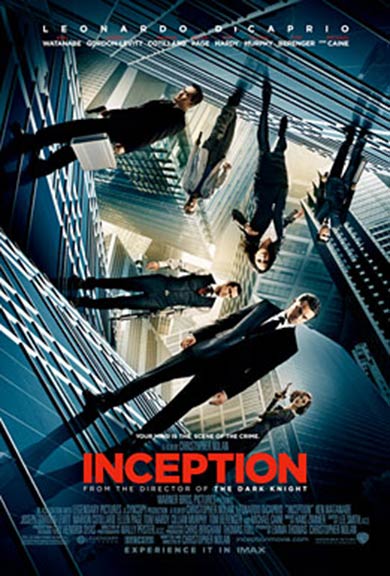
Nolan cast Leonardo DiCaprio in the leading role, and had long discussions with the actor, whom he credits with contributing important ideas for using his character’s feelings as a way to pull audiences deeper into the story on an emotional level. The star-studded cast includes Ken Watanabe, Marion Cotillard, Ellen Page, Joseph Gordon-Levitt, Cillian Murphy, Tom Berenger, Tom Hardy and Michael Caine. Describing it as an ambitious endeavour is a considerable understatement.
Scenes were filmed in Japan, Morocco, France, Canada, the United States and England. They range from strolls down city streets to a breathtaking ride on skis down a snow covered slope and surrealistic journeys inside of dreams.
“We can do amazing things on a set pretending to be in Morocco,” Emma Thomas says, “but the energy feels different when we are shooting at real locations. There is something almost indescribable.
Dream sequences were filmed on sets at Cardington Studio, including the former zeppelin hangar where scenes for Batman Begins and The Dark Knight were produced. Gaffer Cory Geryak and first assistant Bob Hall, who are longtime collaborators, travelled to all locations with Pfister.
Format and kit
Nolan and Pfister discussed producing Inception in the 65mm IMAX format they used while filming The Dark Knight, however they agreed that would have been impractical, because of the many “runaround” handheld shots envisioned. The visual grammar they created was produced with a blend of shots in 65mm and 35mm anamorphic formats augmented with VistaVision aerial images. They also used a Photosonics camera to record ultra-slow motion images for dream scenes.
The camera package provided by Panavision included 35mm Panaflex MXL and ARRI 235 bodies, with a complete set of anamorphic lenses, Panaflex 65 mm Studio and Spinning Mirror bodies, and a full range of lenses. Pfister had Kodak Vision 3 500T 5219 negative on his palette for night and interior scenes, and Vision 3 250D 5207 and Vision 2 50D 5201 for daylight exteriors.
He and Nolan generally covered scenes with a single camera. The exception to that rule were action sequences where two or more cameras provided coverage from different perspectives. Pfister is a former news cameraman who generally does his own handheld shots. He made certain the cast knew he had their interests at heart.
“Wally and I really started to hit it off when we started talking about music,” Gordon-Levitt says. “He’s a great guitarist. He brought me to a blues bar in England where he played the guitar and I backed him up on drums. You can see his musicianship in his camera work. His use of a handheld camera was almost like having another character in scenes. … You can feel the movement link with his timing and rhythm.”
Other scenes were filmed with cameras on a Steadicam and a Technocrane. Shots filmed in 65mm format ranged from crowd scenes on city streets to an intimate sequence where a character is visiting his dying father. The higher resolution images are like a magnet that draws the audience into the emotions of that sequence.
Aerial scenes were filmed in VistaVision format, which Paramount Pictures used to produce The Rose Tattoo and other motion pictures during the 1950s. Images are recorded on 35mm film that is eight rather than four perforations long, and the film runs horizontally through the camera. Pfister explains that the higher resolution images “jump off the screen, and give added clarity to shots with intricate details.”
They filmed slow-motion sequences with a Photosonics camera, frequently at 1,000 or more frames per second. The camera was initially used during the 1960s and ‘70s as a tool for photo instrumentation applications, ranging from studying the dynamics of how machines work to documenting launchings of NASA space vehicles.
Inside dreams
Nolan says that the idea for a story about what happens inside of dreams has been percolating in his fertile imagination since he was 16 years old.
“I read a script for Inception sometime after we made Insomnia (2002),” Thomas recalls. “Chris had only written 80 pages. Either the timing wasn’t right or Chris didn’t feel that he had gotten the story to the place he wanted. We went on to other projects. After we finished The Dark Knight (2008), Chris and I were talking about what should come next. He pulled the 80 pages out of the drawer, and said, I think it will work.”
Nolan gave Pfister the script for Inception to read in February, 2009. “I was blown away,” Pfister recalls. “It had a lot of emotion packed into it. In our first discussion, I asked Chris how he wanted audiences to see dreams on the screen. He said that he wanted them to feel real with an enhanced sense of time. Chris said that a 10-minute dream can feel like it’s a day long while you are experiencing it. The slow-motion imagery helps to create an existential feeling.”
Pfister visited locations that scouts found in the various cities. They ranged from a helipad on a rooftop in Tokyo to city streets in Paris and Morocco and the ski slope in Canada. After visiting the latter location, Pfister recruited cinematographer Chris Patterson who has specialised in shooting skiing films for 18 years. “Chris has mastered the art of shooting handheld shots while skiing,” he says.
Dream sequences filmed in Los Angeles include one at a vertical lift bridge which links the harbour to an island. While the bridge is rising to allow a ship to sail under it, a van crashes through a barrier and falls off the edge of the bridge into the ocean. The shot of the car falling off the edge of the bridge into the ocean was filmed in slow motion.
The production team spent about two months shooting scenes in London, mainly on sets at Cardington Studio and in a former zeppelin hangar.
Physical effects
“(Special effects supervisor) Chris Corbould played a crucial role in the design of sets used for physical effects shots,” Pfister says. “One set was an elevator shaft where an explosion is followed by a ball of fire coming up from the bottom in slow motion.”
Another set is a nightclub where Cobb is telling Fischer (played by Murphy) that they are inside a dream where he controls what happens. As Cobb stands up, the light coming through a window shifts from a warm sunset to a cool, dark cloudy look while the nightclub begins to tilt at a 30-degree angle. Pfister explains that it is a non-verbal way of telling the audience they are witnessing a dream.
“We used a 20K with double CTS filters outside a window on the set to create an orange sunset look,” Pfister says. “We used diffusion to darken the light as the set tilted and glasses and plates began sliding off the bar and tables.”
He makes it sound simple, but his collaboration with the gaffer and effects team is a subtle way of telling the audience they are witnessing Cobb spying on a dream.
A fight scene was staged in a 160-foot long hallway set which rotated 360 degrees, while Arthur, portrayed by Gordon-Levitt, is attacked by several people. “A classic shot in 2001 inspired this scene,” Pfister says.
Arthur and his attackers seem to be
walking on the walls and ceiling. It was a physical effect shot. Gordon-Levitt and the stunt men playing his attackers were suspended by wires and the camera was on a Technocrane which rotated with the set.
“We had a few small LED lights built into the floor and ceiling,” Pfister says. “We had to keep them cool, so the actor or stunt men wouldn’t be burned if they accidentally stepped on or touched one.”
Another shot was made in a second rotating hallway set where the camera was on a track that was hidden by the carpet on the floor. The camera dollied in tune with the action while the set was rotating. Pfister lauds stunt coordinator Tom Struthers, Corbould and the visual effects team led by Paul Franklin at Double Negative in London for helping to make the physical effect shots transparent.
It was a global endeavor in every way. Imagica in Tokyo, LPC in Paris, and Technicolor in London and Los Angeles handled front-end lab work, including film dailies. Nolan and Pfister share a belief that watching dailies projected on film with the cast and crew is an important part of the creative process. Pfister timed Inception with David Orr, a longtime collaborator at Technicolor. The film is being released in both traditional 35 mm film and IMAX formats. The conversion to IMAX was done at DKP 70MM Inc., an IMAX facility in Santa Monica, California.
How the legacy began...
Christopher Nolan was a Super 8mm film aficionado and enthusiastic movie fan during his youth. He studied English literature during his student years at University College in London. That’s where he met Emma Thomas, his future wife and filmmaking partner.
“Studying English literature got me thinking about the narrative freedom that authors have enjoyed for centuries,” Nolan says. “It seemed to me that filmmakers should enjoy those freedoms as well. Emma and I were members of the university film society. We showed 35mm feature films during the school year and used the money earned from ticket sales to produce 16mm films during the summers.”
Following was their first feature-length film. Nolan wrote the script, directed and shot the B&W drama. Thomas was one of the producers. Their film played at festivals, including Slamdance in Utah. Maybe it was destiny calling. Nolan saw The Hi-Line at the nearby Sundance Festival.
“It was a beautifully executed film that clearly had a limited budget,” Nolan says. “I had to meet the guy who shot it.” The guy was Wally Pfister, ASC who was also in the dawn of his career. The rest of this story is history that is still in the making.
“It’s an incredible relationship which has evolved over the years,” Thomas says. “I love watching them work together. There is sort of magic on set. There is no hesitancy or miscommunications. I’m not saying they don’t discuss options. They spend a lot of time discussing the script and what is right for the movie. Wally has a great sense of story. Working on films with the two of them is a dream for me, because apart from the fact that they create magic together, they are super-fast, and there is no drama between them, because of the mutual respect they have for each other.”